Picture stepping out your front door into a quiet park, then strolling a few minutes to the lakefront, Millennium Park, or your Loop office. If you want downtown convenience with more breathing room, Lakeshore East in 60601 delivers a calm, green pocket in the city’s core. You get high‑rise living, everyday amenities, and quick access to culture and the lake without feeling stuck in the middle of a tourist zone. This guide shows you how the neighborhood works, what homes are like, how to get around, and the key checks to make before you buy or rent. Let’s dive in.
Lakeshore East at a glance
Lakeshore East is a master‑planned, mixed‑use neighborhood on the east side of downtown Chicago. It rose from former rail and industrial land and was designed around a central park, which gives the area a true urban‑oasis feel. The plan emphasized high‑density housing, ground‑floor retail, and pedestrian connections to the lakefront.
You sit between the Loop, Streeterville, River North, and the South Loop, which puts you near Millennium Park, the Lakefront Trail, and Navy Pier. The result is a residential district that feels newer and more cohesive than many downtown pockets. For deeper context on city planning in this area, review the Department of Planning and Development’s resources from the City of Chicago.
Who lives here and why
You see a mix of urban professionals, couples, and empty‑nesters who want a quieter downtown base. Some small households choose larger condos or townhome‑style units around the park. Renters include young professionals and corporate transferees who value convenience and building amenities.
Day to day, the neighborhood leans residential and park‑oriented. Mornings bring joggers heading to the lakefront. Lunch and early evenings are lively around the green space. Weekends in summer are active, while winters are calmer but still convenient for culture and dining nearby.
Homes and buildings
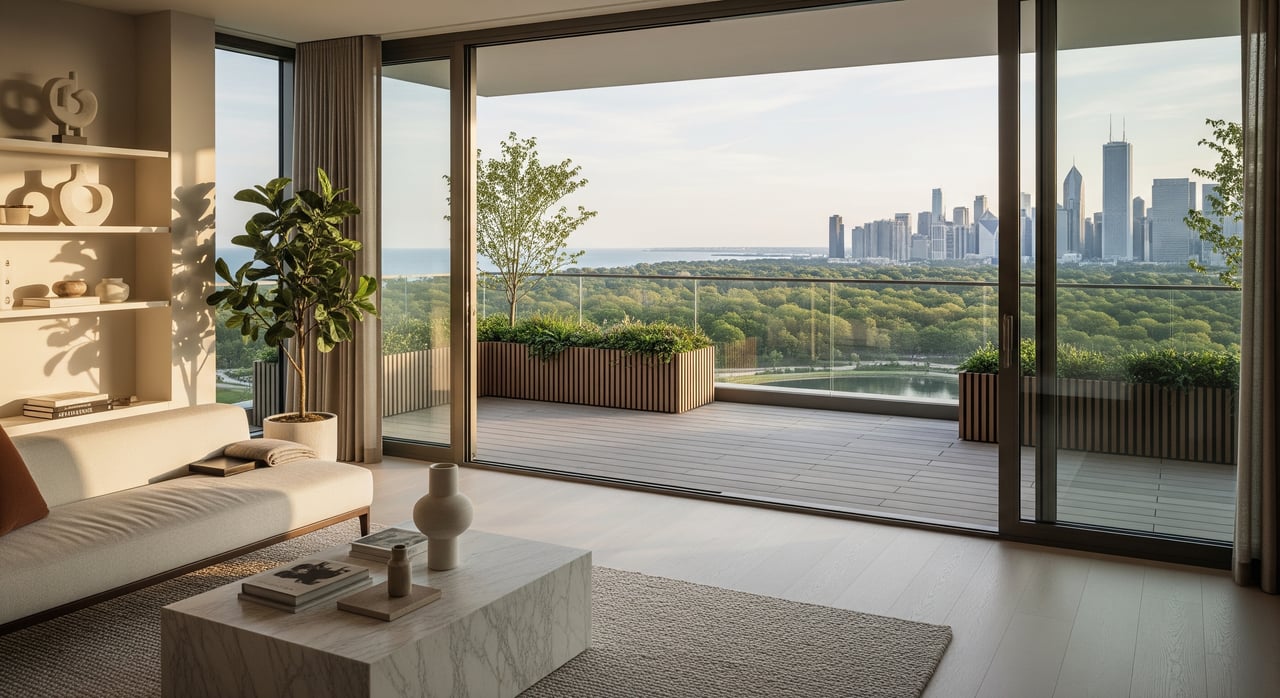
Expect mid‑ to high‑rise towers with on‑site amenities like concierge services, fitness centers, pools or rooftops, resident lounges, package rooms, and bike storage. Buildings range from luxury towers with extensive services to more modest rentals. Unit types run from efficient studios to larger two‑ and three‑bedrooms, plus a limited number of rowhouse‑style homes.
Ownership is mixed. You will find both condo buildings and large rental communities, often on the same block. The balance varies by address, so it pays to dig into building‑level details when you shortlist options.
What it feels like to live here
- Park views and green space soften the high‑rise city feel.
- Lakeshore East tends to be quieter at night than River North and parts of Streeterville.
- You can walk to the lakefront, downtown offices, and major attractions.
- Building amenities reduce day‑to‑day friction, especially during winter.
Everyday conveniences
The central park is the neighborhood’s anchor, with play areas, dog‑friendly zones, and seasonal programming. Quick connections get you to the Lakefront Trail for running, biking, or weekend walks. Many towers include ground‑floor retail and services. Larger grocery and pharmacy options are in adjacent downtown districts, all within a short walk.
Dining is split between in‑neighborhood spots and the broader restaurant scenes in River North and Streeterville. If you want instant access to late‑night energy, you will find it nearby. If you prefer to retreat to a calmer block, Lakeshore East lines up well.
Getting around
You can rely on a mix of walking, transit, and ride‑share. Lakeshore East has strong walkability scores, and you can verify a specific address using Walk Score’s neighborhood lookup.
For public transit, multiple downtown CTA rail stations and bus routes are within walking distance. Use the CTA maps and schedules to plan your commute. If you travel the suburbs, Metra trains operate from downtown hubs, including Millennium Station for certain lines. Check routes and timetables at Metra’s official site.
Driving is straightforward for lakefront access via Lake Shore Drive, but downtown parking can be costly and limited. Many residents opt for a deeded or leased garage space, or skip car ownership and rely on transit and car‑share.
Schools and family life
Public school assignments in downtown vary by address. Confirm your specific address using the Chicago Public Schools boundary lookup. Many households also consider selective enrollment, magnet, or private options across the downtown area.
For families, the park and nearby lakefront are major draws. Playgrounds, open lawns, and seasonal events add flexibility to city living. Daycare centers, afterschool programs, and enrichment options are available downtown, though offerings change by season and provider.
Compare nearby neighborhoods
Lakeshore East vs Streeterville
Streeterville mixes medical institutions, hotels, and older high‑rises with a steady stream of visitors heading to Navy Pier. Lakeshore East is newer, planned around a central park, and leans more residential. If you want a quieter home base with a cohesive green space, Lakeshore East stands out. If you want immediate proximity to hospital campuses and more hotel‑oriented blocks, Streeterville may fit.
Lakeshore East vs River North
River North is known for galleries, dining, and nightlife, plus a broader spread of building ages and styles. Lakeshore East favors a calmer, park‑centered lifestyle with quick lake access. If nightlife energy is a top priority, you may prefer River North. If you want newer construction, green space, and a quieter evening scene, Lakeshore East is compelling.
Lakeshore East vs South Loop
The South Loop continues to grow more residential and is close to the Museum Campus. Lakeshore East has a smaller footprint, sits closer to the lake and Millennium Park, and often feels more boutique and park‑focused. Your choice comes down to the daily rhythm and anchors you value most.
Costs beyond the price
When you compare options, look closely at monthly costs and building policies. Many condo associations include amenities, water, and sometimes heat in monthly assessments. Specific inclusions vary by building, so request documentation before you write an offer. Property taxes can vary by unit and assessment year, and you can verify parcel details with the Cook County Assessor.
Parking is often a separate line item, either deeded or leased. Guest parking is limited, and ride‑share or car‑share can fill gaps. If you plan to own a car, factor monthly garage costs into your budget.
Key buyer and renter checks
- Condo association health. Review meeting minutes, budgets, reserves, and recent special assessments. Ask about planned capital projects and any rental caps or waitlists.
- Building policies. Pet rules, move‑in fees, storage, and bicycle rooms differ by address. If you plan to rent out your unit, review bylaws and confirm city rules through the City of Chicago’s business and consumer protection department.
- Short‑term rental rules. Many associations restrict short‑term rentals. Chicago also regulates registration and hosts, so confirm compliance before you buy or list.
- Lending considerations. Some luxury condos have lending histories or requirements that affect loan options. Work with a lender who understands condo approvals.
- Insurance and flood awareness. Proximity to the lake means you should check your block on the FEMA Map Service Center and confirm building coverage plus unit owner policy needs.
- Construction and views. Downtown development evolves. Ask about planned or permitted projects that could affect sunlight, views, or noise.
- Safety and data. Downtown has visible policing and private building security. For up‑to‑date statistics, review the Chicago Police Department’s crime data resources.
A day in Lakeshore East
- Morning. Jog the Lakefront Trail, grab coffee, and walk to your office or hop a CTA line.
- Midday. Lunch in or near the park, errands at ground‑floor retail.
- Evening. Unwind in your building’s fitness center or rooftop. Dinner close to home or a short walk to River North or Streeterville.
- Weekend. Bike the lakefront, explore museums and Millennium Park, then return to a quieter block when you are ready to recharge.
Is Lakeshore East right for you
Choose Lakeshore East if you want newer high‑rise living with a built‑in park, fast lake access, and walkable connections to offices and culture. If late‑night dining and galleries on your doorstep matter more than a quiet block, consider River North or parts of Streeterville instead. Most buyers and renters here want a balanced city life where amenities and green space take the edge off downtown pace.
If you are weighing buy versus rent, or deciding between buildings, you do not have to figure it out alone. For a data‑driven shortlist, building‑level insights, and clear next steps, connect with Lesley Sweeney.
FAQs
What and where is Lakeshore East in Chicago
- A master‑planned residential pocket in zip code 60601 near the lakefront, set between the Loop, Streeterville, River North, and the South Loop, planned around a central park.
How does Lakeshore East compare to River North for lifestyle
- Lakeshore East is quieter and park‑centered with newer towers, while River North offers denser nightlife, galleries, and a broader restaurant scene.
What should I know about HOA fees in Lakeshore East condos
- Dues vary by building and often cover amenities and some utilities, so request association budgets and inclusions before making an offer.
Is parking difficult in Lakeshore East
- Many buildings offer deeded or leased garage spaces, guest parking is limited, and residents often mix walking, transit, and ride‑share to reduce car needs.
What transit options serve Lakeshore East commuters
- Multiple CTA bus and rail connections are within walking distance, and Metra service from downtown stations, including Millennium Station, supports regional commutes.
Are short‑term rentals allowed in Lakeshore East buildings
- Policies differ by association, and the City of Chicago regulates short‑term rentals, so review building bylaws and city rules before renting.
Do I need flood insurance near the lakefront
- Requirements depend on your building and block; check FEMA’s map for your address and confirm coverage with your insurer and association.