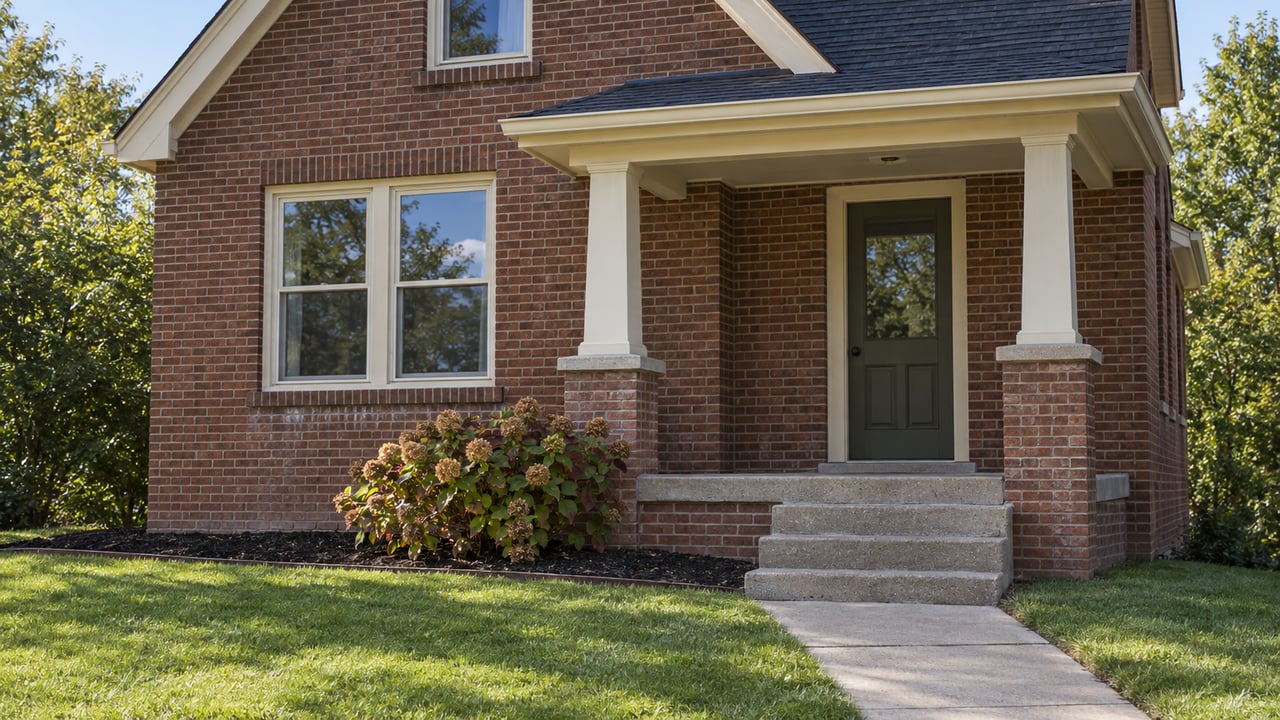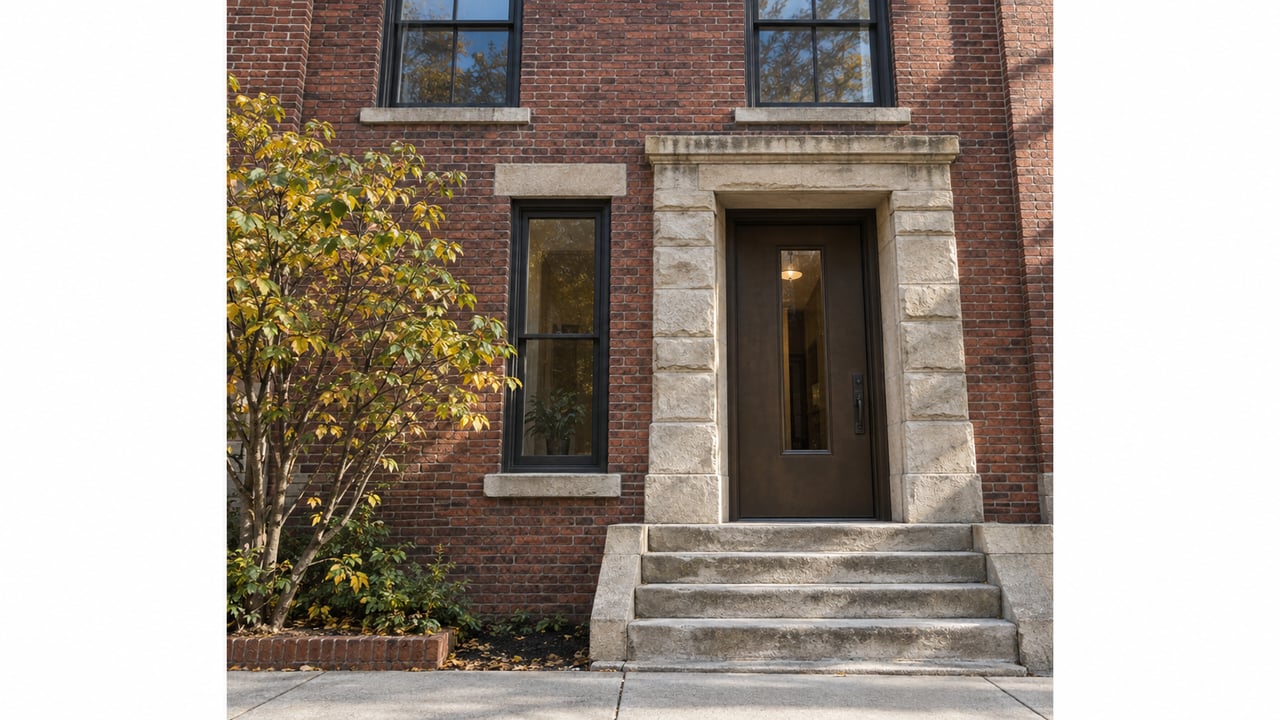
Two houses on the same LaPorte County block, same square footage, same assessed value, can carry tax bills that are twice as far apart as their front doors. Not because of a hidden zoning quirk or a special assessment district. Because one owner lives there year round and the other doesn't.
Indiana's property tax system runs on occupancy, not just value. A home used as a primary residence is capped at 1% of its gross assessed value under the state constitution. The same home used as a second home, a vacation rental, or an investment property is capped at 2%. That gap is written into Article 10, Section 1 of the Indiana Constitution, added by voters in 2010, and it means the tax bill printed on a Michigan City listing sheet reflects the seller's situation, not the buyer's. If you're closing on a lakefront property you won't occupy full time, the number you inherit is not the number the seller was paying. Here's the math behind why, and what it means for anyone weighing a Michigan City purchase heading into 2027 budgeting.
The Cap Follows The Person, Not The House
Indiana's circuit breaker system sets three ceilings: 1% of gross assessed value for an owner-occupied homestead, 2% for other residential property, including rentals and second homes, and 3% for commercial and industrial property. These caps are constitutional. The Indiana Department of Local Government Finance's fact sheet on the caps lays out the mechanics: if the calculated levy on your property exceeds the applicable cap, a circuit breaker credit automatically knocks the bill back down to the ceiling.
The catch for buyers is that the classification resets at the point of use, not at the point of sale. A seller who lived in a Michigan City home for twenty years and claimed it as a homestead was taxed at the 1% tier with two deductions layered on top, as IN Appraiser Pros explains. A buyer who keeps the same house as a weekend place on the lake starts fresh at the 2% tier with neither deduction, on day one of ownership.
What Michigan City's Own Numbers Actually Show
Michigan City's median home price sits at $115,600. If a home at that value were classified as non-homestead, the 2% cap would set a ceiling of roughly $2,312. Compare that to the actual range of bills Michigan City owners pay: about $926 at the 25th percentile, climbing to roughly $1,986 at the 75th percentile and $3,912 at the 90th, according to property tax data compiled by Ownwell for Michigan City. The lower half of that range sits nowhere near either cap, which is the clearest sign that most current owners are homesteaded and drawing on both deductions. The bills near the top of the range reflect homes valued well above the city's median, not the median home pushed toward a non-homestead ceiling.
Take the deductions away, and the ceiling becomes the relevant number for a median-value home, not the percentile spread current owners experience. A non-homestead buyer at the same $115,600 assessed value isn't shopping around the 25th or 75th percentile of what current owners pay. They're shopping around 2% of gross assessed value, full stop, because the deductions that keep most current owners well below that line don't apply to them.
The Deductions That Disappear The Moment You're Not Living There
Indiana's homestead deduction stack is generous, but it's built exclusively for owner-occupants. For 2026, the standard deduction removes $48,000 from assessed value, or 60% of assessed value, whichever is smaller. M/I Homes explains that a supplemental deduction then strips another 40% of what's left. On a $115,600 assessed home, that's $48,000 off the top, then 40% of the remaining $67,600, leaving a net taxable value under $41,000, roughly a third of the original assessment.
Buy that same home as a second residence, and neither deduction applies. The full $115,600 becomes your starting point. You're not losing a discount on top of your bill. You're losing the entire foundation the homestead system is built on, and you're doing it at the same time your cap doubles from 1% to 2%.
Indiana signed the state's largest property tax overhaul in years into law in 2025, and part of that legislation is gradually reshaping this exact deduction structure. The standard deduction is scheduled to phase down toward zero by 2031, while the supplemental deduction phases up toward 66.7% of assessed value over the same stretch. The net effect for homesteaded owners is roughly similar relief, delivered differently. None of it touches non-homestead property, which is where the next piece of the story comes in.
Where This Gap Bites Hardest In LaPorte County
The 1% versus 2% split doesn't hit every corner of the county the same way, because local effective tax rates vary block to block depending on school district levies and municipal budgets layered on top of the base rate. LaPorte County's median effective rate is 1.00%, just under the national median of 1.02%, but that county-wide figure hides real spread among the lakefront towns that draw Chicago-area second-home buyers to this stretch of shoreline.
| LaPorte County market | Effective rate or figure | What it signals |
|---|---|---|
| Michiana Shores | 1.89% effective rate | Highest in the county, close enough to the 2% non-homestead ceiling that the cap does little extra work |
| LaPorte County median | 1.00% effective rate | Roughly matches the national median of 1.02% |
| Kingsbury | 0.82% effective rate | Lowest in the county, leaving real room below the 2% cap |
| Long Beach | $519,000 median home price, $6,946 median tax bill | Highest home values and highest tax bills in the county |
Numbers via Ownwell's LaPorte County property tax data.
Long Beach and Michiana Shores sit directly along the same lakefront corridor as Michigan City and draw from the same pool of Chicago buyers looking at a second home or a rental near the water. The 1%/2% gap matters most in exactly these communities, because home values are higher to begin with, so the dollar difference between the two tiers is larger in absolute terms even before you account for effective rates that are already elevated in places like Michiana Shores.
The New Relief For Non-Homestead Owners, And Why It Won't Help Everyone Equally
The same 2025 legislation that's reshaping homestead deductions also created something new for the other side of the ledger. Starting with 2026 tax bills, non-homestead residential property, the 2% cap category that covers rentals and second homes, gets a fresh deduction worth 6% of assessed value.
On paper, that sounds like meaningful relief heading toward the end of the decade. In practice, how much it actually lowers your bill depends on where your property sits relative to the cap. The deduction reduces the taxable value used to calculate your levy, but if your levy-based bill was already going to land above the 2% ceiling, the circuit breaker credit was already doing the capping for you, and shaving taxable value further doesn't change what you owe. The deduction only produces real savings where the calculated bill sits below the cap to begin with.
That's a meaningful distinction for a buyer comparing towns. In Kingsbury, where the effective rate runs well under 1%, a non-homestead owner likely has real room below the 2% ceiling, and the new deduction should translate into an actual lower bill as it phases up. In Michiana Shores, where the effective rate already sits near 1.89%, that same deduction has far less room to work with, because the cap itself is already the binding number.
What To Check Before You Write An Offer
- Ask for the property's current assessed value, not just last year's tax bill. The bill tells you what the seller paid under their deductions. The assessed value tells you what you'll actually be taxed against.
- Confirm whether the current owner has the property classified as a homestead. If they do, and you won't occupy it as your primary residence, budget for the 2% cap and no deductions from day one.
- Know the paperwork calendar. LaPorte County mails assessment notices, called Form 11s, each spring, typically by mid-May, through the Michigan Township Assessor's office, which covers Michigan City itself. If you want to appeal an assessed value, Form 130 is due within 45 days of receiving your Form 11, or by May 10, whichever comes first.
- If you're buying through an LLC for liability protection, confirm the property's tax classification with the county auditor before budgeting.
- If you do plan to make the home your primary residence eventually, the homestead deduction application is due to the county auditor by January 15 of the year taxes are first due, and it renews automatically each year after that as long as you continue to own and occupy the property.
A Few Questions Worth Settling Early
Can I get the 1% cap if I only live in the Michigan City home part of the year? The homestead cap is built around primary residence status, not partial occupancy. AribaTax reports that county auditors increasingly cross-reference voter registration and vehicle registration to confirm where someone actually lives, so a part-time arrangement without a genuine change of domicile is unlikely to qualify.
Does the same 1%/2% split apply to a condo near the lakefront? Yes. The caps are based on how the property is used, not the type of structure. A condo held as a second home falls under the same 2% non-homestead tier as a single-family second home.
What if I plan to rent the property short-term for part of the year and live there the rest? Indiana does allow a prorated cap for a property split between homestead and rental use, calculated as a weighted average across the two portions of assessed value. The exact split depends on how the county classifies the usage, so this is worth confirming with the county assessor's office before you assume a blended rate.
None of this changes whether a Michigan City lakefront property is worth buying. It changes what number belongs in your first-year budget, and that number is not the one on the seller's most recent tax bill.
If you're weighing a second home, a rental, or a full-time move along this stretch of the Indiana shoreline, Lesley Sweeney works both sides of the Chicago-to-Northwest-Indiana move and can walk through what a specific property's assessed value and classification actually mean for your numbers before you write an offer. Schedule your complimentary market consultation to get the math right from the start.
This article is general information, not legal, tax or financial advice. Consult a qualified professional about your situation.