When does a Gold Coast condo association's 2027 budget start to matter to someone who doesn't own a unit there yet? It matters for any buyer financing a unit in a larger building through a Fannie Mae Full Review loan, if the application is dated January 4, 2027 or later. The decision is also happening now. Associations whose fiscal year starts January 1 are writing that budget this fall.
The reason is a lender letter Fannie Mae published on March 18, 2026. It changes how lenders review condo buildings, not borrowers. Taken together, its deadlines make the association's budget part of the buyer's financing. An approved buyer can still lose access to a conventional loan if the building's numbers fall short.
The building now gets underwritten
The letter makes three changes that matter for established high-rises. Each takes effect on its own date.
- Limited Review is gone. Lenders had to stop using this lighter building review for loan applications dated on or after Aug. 3, 2026. Established projects now go through Full Review, or a waiver if the building is small enough to qualify. Chicago community-association attorneys at Levenfeld Pearlstein say associations with more than ten units must now complete the full lender questionnaire, Fannie Form 1076 or Freddie Form 476.
- Reserve studies have to be funded at the top of their range. A building can use a reserve study to show its reserves are adequate even if its budget doesn't meet the standard allocation. Since Aug. 3, 2026, the lender must confirm the budget includes the highest recommended allocation in that study. Lenders can no longer accept the baseline funding method, which lets the reserve balance approach zero without going below it.
- The reserve floor rises. For Full Review loans with applications dated on or after Jan. 4, 2027, the minimum reserve allocation goes from 10% to 15% of annual budgeted assessment income.
Fannie Mae gives its reasons directly. It found that condo projects with underfunded reserves often also need critical repairs, and that those owners can face sudden special assessments or higher dues. Levenfeld Pearlstein expects the changes to push boards to raise reserve contributions so their buildings stay eligible for Fannie- and Freddie-backed loans.
Where the 15% gets decided
Under Illinois law, a board's budget can't change overnight. The Condominium Property Act requires that owners receive the proposed annual budget at least 25 days before the board adopts it. The proposal must show which portions go to reserves, capital expenditures or repairs, and real estate taxes. Put the two calendars side by side and the overlap is clear.
| Date | What happens | Who it binds |
|---|---|---|
| July 1, 2026 | New Fannie Mae master-policy deductible and unit-owner insurance rules apply | Loans with applications on or after this date |
| Aug. 3, 2026 | Limited Review retired; reserve studies must be funded at their highest recommended level | Loan applications on or after this date |
| 25 days before adoption | Owners receive the proposed budget with the reserve portion identified | Illinois condo boards |
| 21 days after adoption | Window for owners with 20% of votes to petition over a large increase | Illinois condo owners |
| Jan. 1, 2027 | Resale disclosure list adds the association's collection policy | Illinois sellers and boards |
| Jan. 4, 2027 | 15% reserve minimum for Full Review loans | Loan applications on or after this date |
A buyer shopping this winter is looking at units whose eligibility depends partly on a budget vote the buyer had no part in.
The 115% line, and why reserves alone rarely cross it
Illinois gives owners a check on big jumps in assessments. Suppose an adopted budget or special assessment would push the year's total regular and special assessments above 115% of the prior year's total. Owners holding 20% of the association's votes can then petition within 21 days, and the board must call an owners' meeting within 30 days. The budget stands unless a majority of all the association's votes is cast to reject it. Assessments for emergencies or for work required by law can skip this process.
Run the numbers on a hypothetical building that puts exactly 10% of its income into reserves today. Keep the operating spending the same and raise reserves to 15%. Total assessments rise by about 6%. On its own, the new floor rarely reaches the 115% line.
The petition math counts regular and special assessments together, though. A building that pairs the reserve increase with a special assessment for facade or mechanical work, or with a larger insurance line, is the one where owners could force a vote. Buyers in older towers are more likely to see a budget fight in that combined case than over the reserve change alone.
Illinois also lets boards weigh financing directly. The statute requires "reasonable reserves for capital expenditures and deferred maintenance." Among the factors it lists are any reserve study, how assessment increases affect owners and unit values, and the ability to get financing. If a building's condo documents don't require reserves, owners can waive them in whole or in part by a two-thirds vote. A waiver must appear in the association's financial statements and be highlighted in the disclosures given to a prospective buyer.
Eight units on Dearborn Parkway
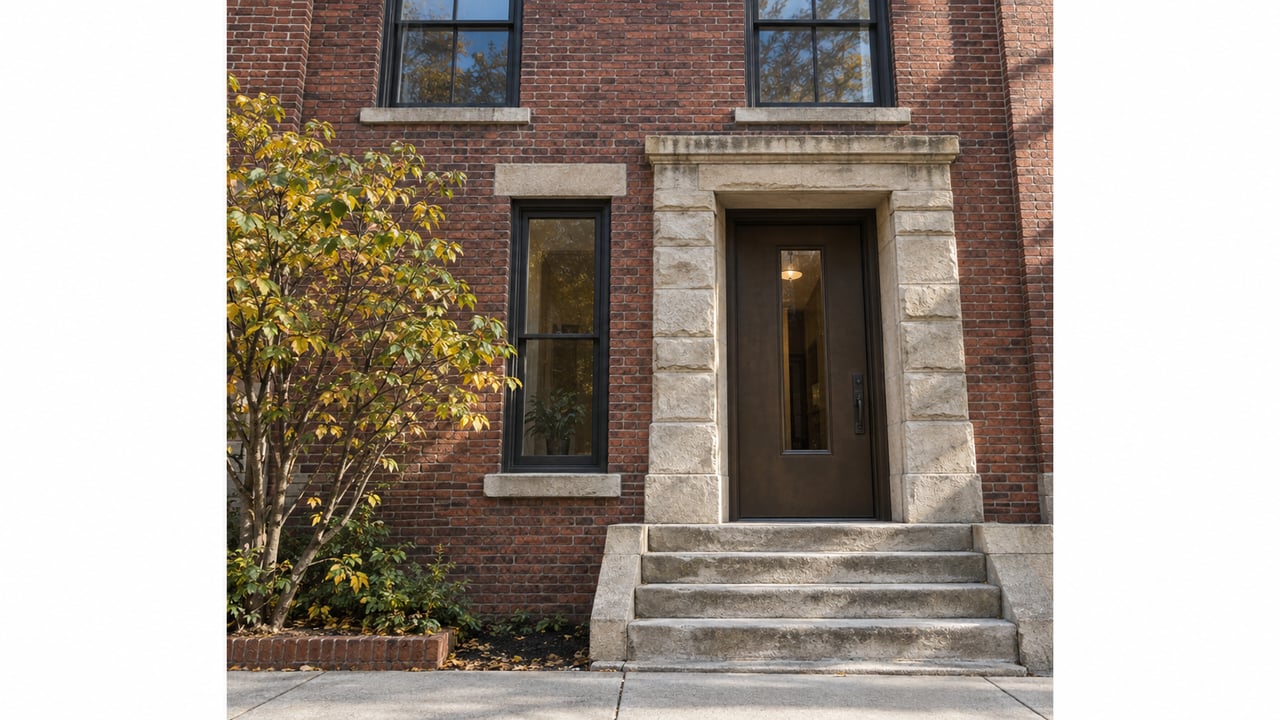
The Gold Coast's newest condo building shows the other side of the rule. In March 2026, Altitude Capital Partners paid $10 million for The Dearborn at 1447 N. Dearborn Pkwy. The 45,000-square-foot brick and limestone courtyard building, once a long-stay hotel, had been known for decades as the "phantom building." It is coming back as eight full-floor condos listed at $2.5 million to $4 million. Altitude's Brian Dohmen told Axios Chicago in July that most of the units had sold and he expected residents to move in this fall.
The same lender letter opened the Waiver of Project Review to new and established projects with ten or fewer units. Buildings of five to ten units qualify only if they aren't part of a master association. Waived projects still can't be marked "Unavailable" in Fannie Mae's Condo Project Manager, and they must meet the insurance requirements. An eight-unit building is within that size limit. A large tower going through Full Review faces the 15% floor and the full questionnaire. In 2027, the size of the association can affect how quickly a lender approves a Gold Coast purchase.
What happens when a building falls short
A project that fails agency review is called non-warrantable. The Chicago Cooperator reported in May 2026 that buyers in those buildings lose access to conventional financing. They typically turn to portfolio or other non-agency loans, which tend to carry higher rates, larger down payments, and tighter credit standards.
Losing financing options hurts more when there are few other units to choose from. In August 2026, the City of Chicago recorded 1,208 condo sales at a $420,000 median, based on Illinois REALTORS data. Citywide inventory across all property types was down 23.3% from a year earlier. Those are citywide figures, not Gold Coast-specific ones. Still, a buyer whose first-choice building fails review has fewer comparable units to fall back on.
Some sellers have started to price in assessment risk. The Real Deal reported in July 2025 that one Loop condo seller bought an HOA Warranty policy for the buyer. The policy cost about $800 and covered up to $10,000 of qualifying unexpected association fees over three years.
Reading the disclosure packet against the lender's checklist
Section 22.1 of the Condominium Property Act requires a seller to make association documents available to a prospective buyer on request. The association must provide them within 10 business days of a written request. The items that map onto the new lender tests:
- Reserve fund amount and status, plus any portions set aside for specific projects
- Capital expenditures planned for the current fiscal year and the next two
- The most recent statement of the association's financial condition
- Pending lawsuits or judgments involving the association
- Insurance coverage carried by the association
- Any reserve waiver, which the statute requires to be highlighted
From Jan. 1, 2027, the list also includes the association's collection policy.
Check the insurance section against Fannie Mae's revised standards too. The master policy must cover at least 100% of estimated replacement cost. For loans with applications on or after July 1, 2026, it may carry a per-unit deductible of up to $50,000. If the master policy has a per-unit deductible or leaves interior improvements uncovered, the buyer needs a unit-owner policy. It must cover the larger of the uncovered restoration cost or the deductible. That makes the master policy's deductible part of the buyer's own insurance quote.
Questions buyers are asking
Do these rules apply to Gold Coast co-ops? The lender letter sets standards for condo projects. If you're buying a co-op on East Lake Shore Drive or elsewhere, don't assume the 15% test applies the same way. Ask your lender which standards govern that specific purchase.
Is Illinois about to require reserve studies? A bill, HB2563, would require reserve studies every five years and make the latest one available to prospective buyers on request. As of its most recent recorded actions, it has not passed. The 15% figure is a lender standard, not state law.
Does application date or contract date control? The Fannie Mae deadlines are tied to the date of the loan application. A buyer applying in late December 2026 and one applying in mid-January 2027 are under different reserve rules.
This information is general and isn't legal or financial advice. Read your building's documents with your own attorney and lender. If you're weighing an older Gold Coast condo for a 2027 purchase, Lesley Sweeney can go through the building's proposed budget, reserve allocation, and disclosure packet with you before you make an offer. Schedule your complimentary market consultation.